

Health and Physical Education (HPE): Ages Nine to Twelve
HPE Overview
Movement, fitness and health have been incorporated into the Montessori curriculum from the time of the first school established by Dr Montessori more than a hundred years ago. Drawing on her medical training, Dr Montessori was keenly interested in the health of the human body and argued strongly that physical activity and good nutrition were essential to the well-being of children. A key component of the Montessori curriculum, from birth, is a focus on the development and refinement of coordinated movement. Dr Montessori also designed gymnastic equipment for the children in her schools and encouraged games in the open air for younger children and outdoor adventure education for older children.
The Montessori curriculum provides a repertoire of activities to enable individual Montessori schools to develop customised programmes to meet their own requirements and those of local education authorities. For children from six to twelve years, the Cosmic Education curriculum provides many opportunities for considering ways of improving quality of life for themselves and others in the classroom and wider community in terms of health and lifestyle, personal relationships, values education, social responsibility and social justice. Here are some examples:
Children move freely around the classroom during the day to complete their work and to care for their environment. They can vary their place of work depending on need e.g., to sit on a chair or on the floor, to stand or walk, to have more or less light, to talk with others or to work quietly.
Many of the activities and exercises of the curriculum incorporate physical activity, including reading and grammar games.
The study of biology includes the story of the great river, a story that initiates the study of human physiology and emphasises the interdependence of all the organs of the human body.
The study of history is organised around an understanding of the fundamental needs of humans, including spiritual needs (personal and artistic expression and religion), as well as material needs (food, clothing, housing, transport and defence, including defence from disease).
As in all areas of the Montessori curriculum, materials and activities designed for PDHPE are prepared to enable self-directed, independent work for individuals and groups. These materials are placed on the shelves as another choice available to the children at any time of the day, rather that at set times only. Children are also involved in research-based projects relating to Health and Physical Education.
The key components of the 9-12 years Montessori Health and Physical Education programme are:
personal development (incorporating lessons of grace and courtesy)
health awareness
physical education
Personal Development (Incorporating Lessons in Grace and Courtesy)
In the Montessori classroom social behaviour is learned through observation and imitation. The three-year age range includes children at varying stages of social and emotional maturity. Older children have the opportunity to become role models and to assist younger children with resolving issues and building their social skills.
Children are shown how to manage social interactions in effective ways during small group lessons known as the lessons in grace and courtesy. These lessons are given at point of need in order draw children’s attention to ways of interacting with others that respect everyone in the class community and that promote harmony. These lessons can take several forms, including:
short role-plays or mini-dramas, often highlighting inappropriate behaviour in humorous ways, then modelling more effective behaviour, or asking the children to act out more effective behaviour
story-telling
group discussions
Lessons in grace and courtesy (sometimes called how to lessons) include:
how to put a chair under a table without disturbing others
how to interrupt politely
how to introduce one person to another
how to express your feelings without hurting others.
As much as possible, appropriate social behaviours are taught through modelling and grace and courtesy lessons rather than through correction. It takes time and much repetition of the grace and courtesy lessons before children understand and incorporate the appropriate behaviour into their own behaviour. The lessons are, therefore, repeated as necessary, but the teacher never draws attention to a particular child or group of children who ‘need’ the lesson. In the Montessori view, correction that embarrasses children, or makes them self-conscious, is damaging and usually counterproductive.
At all times respect of oneself and for others is emphasised. Friendships are also valued as these lay the foundation for future extended relationships. Everyday in Montessori classrooms children make their own decisions about their work and their interpersonal relationships. Children are encouraged to work together to create a miniature and harmonious society.
At the beginning of every school year each class meets to work out the rules the class needs to follow if they are to work harmoniously and productively together. The rules are reviewed from time to time and adjusted if needed. Because the children have discussed and voted on the rules themselves, they adhere to them and ‘police’ them far more rigorously than an adult would. Class meetings continue to be held weekly to discuss problems and issues that have arisen during the week and to work out solutions. In this way children experience the roles and responsibilities of community living.
Health Awareness
There are many features of the Montessori curriculum that show children the importance of a healthy lifestyle.
Through exercises in practical life children learn to care for themselves and their environment, including routines for maintaining health, hygiene and cleanliness (e.g., washing hands, cleaning teeth, pouring water to drink, preparing fruit, dressing for the climate, cleaning surfaces, washing up, sweeping floors).
During the study of history the Fundamental Needs of Humans Charts initiate discussions of those things humans need to live, including good food, safe and secure housing and defence against disease. Follow-up discussions and research projects extend children’s exploration and knowledge to cover nutrition, personal safety and prevention of disease.
During the study of biology, beginning with the story of the great river (a metaphor for the circulation system of the human body), children learn about the functions of the different organs of the body, and the way they work together. With this knowledge children are able to consider how best to keep each organ, and their whole body, healthy and functioning properly.
During the study of botany, children grow plants. As part of this study, they are encouraged to grow plants for food. They can then harvest and prepare the food.
As in all other areas of the curriculum children are encouraged to research Health and Physical Education topics, matched to children’s age and interest, and to present their research to the class. Topics might include, for example, nutrition, the effect of exercise on the body, sun and road safety, or the uses of medication and/or drugs.
Physical Education
In 1947, during a training course in India, Dr Montessori described the most effective school for children aged from six to twelve in the following way:
The school for this age must be full of activity, not only for knowledge, not only for the development of the mind, but also for the development of the body.
Gymnastics was an activity Dr Montessori particular valued for the following reason:
Just as (with) movement, the gymnastics of children is necessary because, as is well known, muscles which are not exercised become incapable of performing the variety of movements of which the muscular system is capable.
She was also an early advocate of teaching young children to swim from as early as the age of four. Regular physical activity is, therefore, an essential component of the Montessori curriculum.
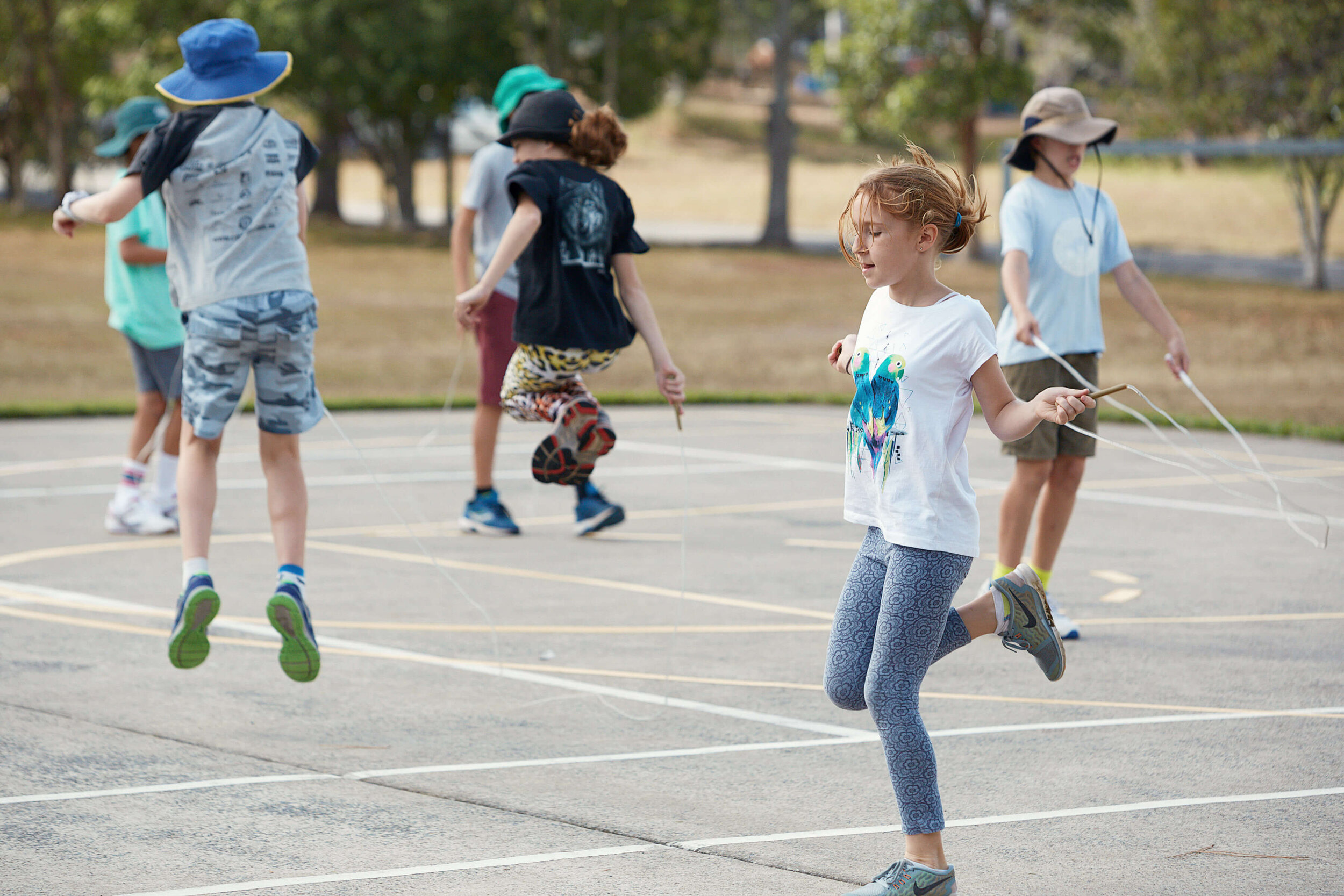
Very young children, infants and toddlers, are very active. They are constantly moving, whether crawling, walking, running, climbing, jumping, swinging or balancing. It is important, as children grow older, to create an environment in which they can maintain this level of physical activity and extend their stamina and physical endurance. To achieve this, the school environment must be designed to promote regular physical activity and to extend children’s physical skill and capacity. As well as opportunities for free movement in the classroom, children in Montessori schools participate in a range of games and exercises that enable them to build agility, strength and coordination progressively, from individual skills to combined, and increasingly more complex, skills. In addition, they participate in a range of fitness activities, including team sport, athletics, water safety/swimming/aquatics, tennis, yoga and dance.
In the Montessori curriculum physical education lessons, materials and activities are designed following the same principles as lessons in other curriculum areas.
Materials and activities are prepared to enable self-directed, independent work for individuals and groups. The equipment is attractive, child-sized, stored in an orderly fashion and is easily accessible to students.
Brief initial lessons, called key lessons, give children just enough information to enable independent exploration (e.g., to introduce a skill, the rules of a game or the safe use of equipment).
Children are free to choose to work with the materials and exercises during the work period and for as long as they like.
The Montessori sports curriculum does not emphasise competitive games. Dr Montessori (1989/1930:17) argued that once children are concentrating on an activity, they are more interested in the activity than in competition. Games are played with an emphasis on:
enjoyment
the gaining of new skills
teamwork and collaboration
being a good sport
safety
Wherever possible, new skills are introduced by skilled adults (e.g., certified swimming teacher).
In Montessori classrooms, assessment is ongoing and integrated into daily practice, ensuring that each child’s growth is nurtured and documented in a way that honours their individuality and supports their wellbeing.
Assessment in Health and Physical Education, as across other learning areas, is designed to be formative, holistic, and child-centred, reflecting the Montessori philosophy with reference to the achievement standards of the Australian Curriculum v9. It focuses on observing and documenting each child’s development across physical, social, emotional, and cognitive domains, incorporating a range of principles including, but not limited to, structured and spontaneous observation as the base, practical demonstration, work samples and portfolios, self and peer assessment and feedback and individual progress tracking.
Health and Physical Education in the 6-12 classroom aims to:
Empower students to make informed choices that enhance their own and others’ health, safety, and wellbeing
Foster self-awareness and emotional regulation through purposeful activity and reflection, supporting the development of the will
Develop respectful relationships through lessons in grace and courtesy, promoting empathy, inclusion, and social harmony
Build personal and social skills to navigate diverse social contexts with confidence and respect
Acquire and apply movement skills and strategies across varied physical activities, encouraging creativity, increasing competence, and enjoyment
Engage in regular physical activity through self-chosen tasks, outdoor exploration, and movement-based learning
Encourage autonomy by allowing students to choose physical activities that interest them and complete them at their own pace
Begin to explore how personal and environmental factors influence health and activity choices, and advocate for positive change in their communities.
Personal and Social Development 3.PE.010
Knowledge, Skills and Understanding
Typically, children will:
.01 Display appropriate verbal and physical behaviour in everyday situations
.02 Further develop and refine communication and cooperation skills to enhance interpersonal and group interactions
.03 Investigate factors that impact resilience and identities
.04 Make decisions as an individual and as a group member
.05 Draw on and use a range of problem-solving strategies to confidently and respectfully express their own needs and feelings in personal and social situations
.06 Demonstrate acceptance for others as unique individuals and for their culture and customs
.07 Understands and describes personal strengths and needs and those of others
.08 Enhance their understanding of personal boundaries and mutual respect by examining real-life scenarios where consent is required, including in the online space
.09 Describe and implement meaningful strategies to develop meaningful and lasting friendships and relationships
+ Materials and Activity
Activities include:
- lessons in grace and courtesy (See HPE Overview at Health and Physical Education (HPE) — Montessori National Curriculum Online | Montessori Australia)
- collaborating on learning activities and research
- creating and reviewing class rules collectively
- class meetings
- discussing values e.g., respect, care, empathy, compassion, responsibility, tolerance, inclusion
- practise skits and dialogues on values and common courtesies
- storytelling, role-play, drama
- • role plays and discussions on the role of challenges, adversity and successes to development of self and to community; exploring and analysing scenarios
- discussion and/or media study of communities facing challenge
- key lessons regarding: Relationships: seeking permission; -setting boundaries; - the nature of consent; - equality in relationships; - strategies for reaching out when relationships feel unhealthy; Safety: health conditions, road, sun, water etc
- incursions, goings out, excursions, school camp
- peer support and mentoring
- running community market stalls
- community service projects
- links to the cultural curriculum/HASS i.e. cultural celebrations
- research projects
Resources include:
- the three-year age range of class community
- card and chart materials
- social stories and books for reflection and discussion
- Montessori Peace Education
- Positive Discipline program
- Australian Curriculum's Learning Area Downloads and Personal and Social Capabilities
- McCormack, G. Raising Resilient Children (2025)
- a variety of fiction and non-fiction texts
+ Links to Australian Curriculum (ACv9)
AC9HP4P01 AC9HP4P02 AC9HP4P04 AC9HP4P05 AC9HP4P06 AC9HP4P07
AC9HP6P01 AC9HP6P04 AC9HP6P05 AC9HP6P06 AC9HP6P07
AC9HP6M09
Health and Safety Awareness 3.PE.020
Knowledge, Skills and Understanding
Typically, children will:
.01 Develop a broader understanding of the internal and external parts and systems of the body and understand their functions
.02 Explain and analyse the consequences of personal lifestyle choices
.03 Describe safe practices appropriate to a range of situations
.04 Identify and describe protective and risk factors in managing health and wellbeing (including in the online space) and implement protective factors
.05 Investigate and explain the factors which may influence ideas, identities and behaviours including media, societal expectations, family, religion and spirituality etc
.06 Describe and apply their understanding of safety in the environment and explain the need for safe behaviours in everyday situations including when taking part in physical activity
+ Materials and Activity
Activities include:
- discussing and justifying responses to relevant topics e.g., nutrition/diet, grooming, hygiene including teeth, safety including road, sun, water, fire, home, school
- growing fruit and vegetables to prepare and/or cook using sustainable food practices
- detailed study of the human body e.g., structure of cells, parts and functions of the brain, glands, genes.
- Life Education and/or key lessons and/or guest speakers e.g., relationships, puberty, drug and alcohol education, cyber safety
- discussion and analysis of how personal choices may impact others
- practse skits and dialogues as applied to help-seeking behaviours
- guest speakers and visiting health professionals
- first aid information appropriate to age group which may include anaphylaxis, infection control, asthma treatment etc
- training and/or advice delivered by a qualified instructor
- key lessons: risk and protective factors to health and wellbeing; body changes over time; safe practices, both physical and psychological; when using technology
- assist with developing risk assessments for going out and camps
- research projects and presentations on various topics
- media study to identify and explore simple techniques which influence formation of identities
Resources include:
- Fundamental Needs of Humans Chart
- The Great River Story and Chart
- body function material
- card and chart materials
- social stories and books for reflection and discussion
- guest speakers
- garden and kitchen resources
- local police school liaison officer
- Online safety resources e.g:
- Online safety basics | eSafety Commissioner
- Cyber Safety for Kids | ChildSafe Australia - - ThinkUKnow
- AC Learning Area Downloads
- 24 hour Movement Guide for Children and Young people
+ Links to Australian Curriculum (ACv9)
AC9HP4P02 AC9HP4P03 AC9HP4P05 AC9HP4P07 AC9HP4P08 AC9HP4P09 AC9HP4P10
AC9HP6P01 AC9HP6P02 AC9HP6P03 AC9HP6P07 AC9HP6P08 AC9HP6P09 AC9HP6P10
Movement and Physical Education 3.PE.030
Knowledge, Skills and Understanding
Typically, children will:
.01 Enjoy physical activity, both indoors and outdoors, and experience success in challenging activities in a collaborative atmosphere
.02 Identify ways to improve their own physical fitness, strength, endurance and coordination, and develop and explain strategies to improve participation of others
.03 Apply movement skills in team games and sports that require communication, collaboration, decision-making and observation of rules
.04 Demonstrate coordinated actions of the body when performing various physical sequences e.g. dance, gymnastics, soccer, and reflect on the effect of the variations of movement
.05 Develop a sense of fair play and sportsmanship particularly to ensure inclusive play
+ Materials and Activity
Activities include:
- freedom to move within the classroom
- practising a variety of locomotor and non-locomotor skills such as balancing, walking, running, galloping, hopping, skipping
- participating in regular aerobic exercise (e.g., jogging, skipping, dance) in dedicated sessions three to five times a week
- exercises of practical life e.g., cleaning, tidying, gardening, cooking
- minor and lead-up games to practse skills, tactics and strategies
- active games across the curriculum e.g., interpretive reading, grammar games.
- practising ball handling and object-control skills e.g., catching, dribbling, striking, throwing, striking and bouncing
- surveys; research projects
- practising ball and team games regularly (e.g., handball, softball, netball, soccer, badminton, table tennis, cricket, tennis, volleyball, squash) in dedicated sport sessions
- forming and working in teams and small groups e.g. team sports and orienteering
- discussions, activities and exercises on the meaning of fair and inclusive play
- discussions, role-plays and exercises around safety and the practice of safe behaviours in movement and physical activity
- consider and reflect on ways to modify games to allow access and inclusion of all
- using the body to make shapes, angles and symmetry (See maths link) in movement sequences
- experiment with movement modifications in skill development
- Reflect on modifications to improving outcomes when engaged in movement
- discussions, role-plays and exercises around safety and the practice of safe behavioursengage in active play, structured, unstructured and spontaneous, alone or with others
- experience non-traditional games from other cultures
- adventure activities
- develop a simple fitness plan
- identify and discuss how place can impact on types of physical activity
Resources include:
- movement command cards
- a range of outdoor equipment to support gross motor movement and development
- a range of venues and surfaces e.g., hard flat surface, vertical wall with hard surface, large grassed area
- sports equipment e.g., balls, bats, rackets, hoops, ropes
- appropriately trained teachers and coaches
- AC Learning Area Downloads
- 24 hour Movement Guide for Children and Young people
+ Links to Australian Curriculum (ACv9)
AC9HP4P01
AC9HP4M04
AC9HP4M05
AC9HP6M04
AC9HP6M05
AC9HP4M06
AC9HP6M06
AC9HP4M01
AC9HP4M02
AC9HP4M09
AC9HP6M01
AC9HP6M02
AC9HP4M03
AC9HP4M07
AC9HP6M03
AC9HP6M07
AC9HP4M08 AC9HP4M09 AC9HP6M08 AC9HP6M09 AC9HP4P04 AC9HP4P05