

History and the Humanities Curriculum for Adolescents Aged Fifteen to Eighteen Years
Jump to section:
Inquiry
5.HH.010 Skills
5.HH.020 The Study of Modern Historical Events
5.HH.030 The Study of the Present Time and the Nation
Specialist focus on Ancient History: study projects
5.AH.010 Introduction to historiography: historical investigation - issues & skills.
5.AH.020 Detailed comparative study of ancient societies
5.AH.030 A detailed study of a society over time
5.AH.040 A detailed study of a person of influence in a particular society
5.AH.050 A detailed study of an ancient historical period
Specialist focus on Modern history: study projects
5.MH.010 Detailed study of periods of transition between the ancient and modern eras
5.MH.020 Detailed study of a movement for change in the 20th century
5.MH.030 Detailed comparative study of nations of the 20th century
5.MH.040 Detailed study of a movement for peace in the 21st century modern world
A focus on geography: study projects
5.GH.010 Human interaction with the natural environment: natural and ecological hazards
5.GH.020 Human impact on the natural environment: sustainability
5.GH.030 Human impact on the natural environment: change
5.GH.040 Human impact of cultural, economic, and political activities on spatial organisation
Introduction
Throughout the Montessori curriculum for students from the age of six, history is taught systematically and sequentially. In the Montessori adolescent curriculum, the study of history is embedded in the wider contexts of the humanities, incorporating geography, anthropology, politics and economics. Like the science curriculum, the pedagogy used to teach history and the humanities in the Montessori adolescent community is project-based. Students are engaged in projects related to two areas of historical study:
The study of the history of humanity
The study of the building of human civilisation
Humanities projects are studies of human groups in different places and times from ancient to modern. These projects inevitably include studies in geography, anthropology, politics and economics. These wide-ranging studies introduce students to a variety of human experiences, enabling them to see the world through the eyes of others, and enriching their appreciation of the nature of change. Strong emphasis is placed on the way human civilisations emerge and evolve over time and in different parts of the world. The projects might cover, for example:
early humans, ancient civilisations and traditional culture, and early agriculture, including traditional pre-settlement Australian Indigenous and other First Nation cultures, the Incas, Aztecs and Mayans, the ancient peoples of the Indus Valley
classical civilisations, including Ancient Greece and Rome, classical China and other ancient civilisations of Asia, Alexandria
societies in transition, including feudal Europe, Renaissance and the Enlightenment in Europe, the colonial and Federation periods in Australia
age of ideas and science, including the scientific and industrial revolutions, global exploration, transport and mass migration including migration to Australia, and space exploration
The aim of this area of study is to provide adolescents with a historical framework through which to study the story of humanity over time so they can understand our time, place and culture as part of the continuing story of humanity and its endeavours. In this way, adolescents can understand where and how their own ‘here and now’ fits into the continuing story. The study of history, therefore, contributes to adolescents understanding themselves and the social context in which they find themselves, as described by Ewert-Krocker (2001: 411) in the following way:
Our job as educators, if we are to adopt a Montessori perspective is not to teach history….our job is to help the adolescent see her role in history, to see that she has a role in history…
As students approach the final years of adolescence, they may embark on a path of study that takes them toward the role they will finally play in society. To this end students may choose to specialise within a study area of the humanities, exploring the world through a particular lens as they devise what their contribution to society will be as an adult. In either specialisation, students are encouraged to continue to call upon skills and knowledge acquired through their studies across curriculum areas and take an integrated approach to their inquiries and explorations through hands-on experience in the real world together with academic study.
Students are invited to contribute to the real work of society by engaging in occupations alongside professionals in the specialist field. This will help to provide a context for their academic studies. Within the humanities in the Australian curriculum students have a range of choices including Ancient History, Geography, and Modern History. Individual State/Territory curriculum offer a further range of subject choices from which students may choose.
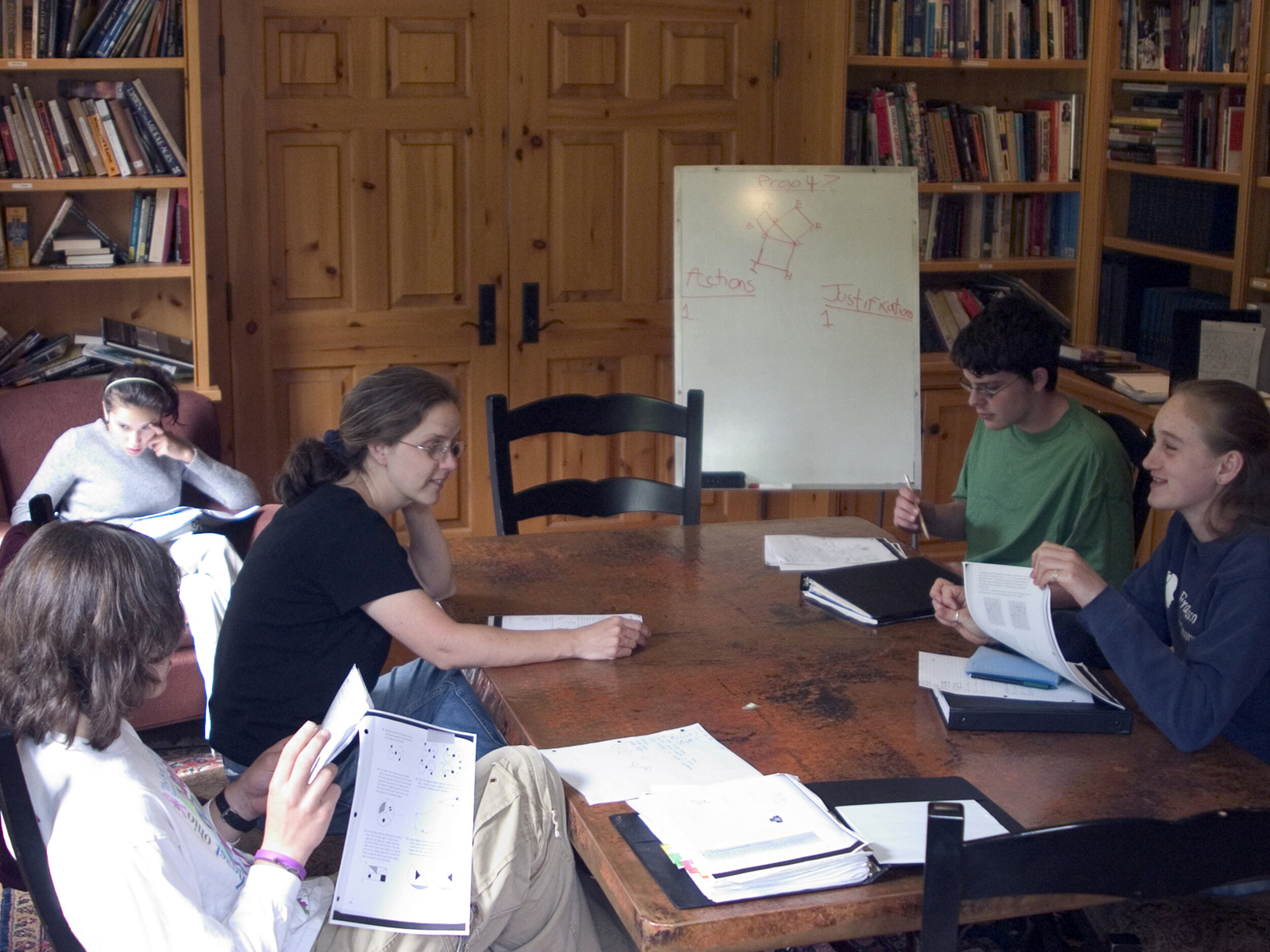
The pedagogy used to deliver the program encourages students to investigate the art of discussion over time and across cultures, and in this way to build their own discussion and debating skills. Students also use visual arts, drama, and written expression to represent and display the knowledge they have gained and the philosophical values they have explored through the study of history. Timelines are used and created to establish chronologies. Each project follows the same pattern of delivery:
First, students are presented with key lessons and key concepts.
Second, students engage in individual and group research lessons, aligned with the literacy lessons needed to carry out the research effectively.
Finally, students present the information they have gathered and organised during their research by means of written text, artistic expression, spoken presentation and/or dramatic performance.
The Aims of the Montessori History and Humanities Curriculum for Adolescents from Twelve to Eighteen Years
The aims of the Montessori History and Humanities curriculum for adolescents aged from twelve to eighteen years include the following:
to compare the development of cultures in the ways they have met their fundamental needs
to group events by defined historical eras and timelines
to consider cause and effect as well as multi-cultural perspectives, when studying human groups in different historical eras
to investigate patterns of migration and settlement of peoples and their diversity
to review geographic and climatic data for world regions in order to consider the impact of the environment on the cultures being studied
to examine issues of war and peace in relation to the diffusion of people, ideas and products
to compare and contrast Australian government and culture with other governments, including the following perspectives:
development of Australian government, the nature of Australian democracy and how it works in the context of social change
impact of large-scale change on different groups of people in Australian society, including, for example, settlement, immigration, gold rush, exploration, industrialisation, the world wars, economic cycles
to explain processes for developing public policy in Australia
to identify and compare differing points of view and to recognise bias
to understand how knowledge of history contributes to the present and anchors the future
to read primary sources in philosophy and literature from a culture being studied in order to gain insight into the mind and spirit of ahuman society at points in time
to write and present research papers drawing on multiple sources
to apply knowledge and skills in creative expression (e.g. drama, art, music) to personalise studies in history and communicate them with others
to link the needs and interdependencies of human communities across time with the daily life and challenges faced by the adolescents themselves and their community
to investigate patterns of global economics (e.g. resource and food distribution) and their effects on contemporary societies
to understand there are a variety of sources of information and appreciate the need to analyse the reliability of information when using it to draw conclusions about the characteristics of societies and events through time.
5.HH. 010 Skills
Conduct individual or small group research:
Alongside, as well as in addition to, their general guided learning, each student, as an individual or in groups, is involved in conducting research which may involve the following:
a) Formulate and refine questions to guide and plan their research
b) Acquire and organise primary and secondary sources of information
c) Consider the value of and source material from a range of sources including lectures, presentations, images, interviews, artefacts etc in a range of forms
d) Evaluate the usefulness of sources to their study with increasing complexity and consideration of viewpoints and perspective, origin, purpose & historical context
e) Develop spoken and written summaries, explanations of key ideas
f) Curate, consider and incorporate evidence to support arguments
g) Apply subject-specific criteria to their evaluations
h) Apply skills of observing, questioning, concluding, communicating, reflecting & responding
i) Plan and organise learning opportunities, including visiting experts, excursions, and field trips to relevant places of relevant significance
j) Effectively use appropriate digital technologies in their research
.02 Socratic seminars and discussion
Use the techniques of Socratic seminar to:
a) Consider a diverse range of sources of information about particular societies
b) Apply subject-specific criteria to evaluate factors relevant to their inquiry
c) Interpret, discuss and analyse source documents
d) Analyse issues related to evidence including the authentication, preservation, ownership and/or display of material from the past.
e) Consider information and evidence for reliability and usefulness, significance, perspectives, and interpretations
f) Reflect upon and refine their argument in engaging with others through questioning, discussion & debate
.03 Presentation of research
a) Students present their research appropriate to specific audiences.
b) Presentations take a range of forms (written, digital, spoken etc), using subject-specific conventions, terminology & concepts.
c) Presentations may incorporate a combination of techniques to convey information and arguments, including ICT, artworks, music, dance, dramatizations, debates, charts, models, and 3D reconstructions.
Australian Curriculum links
The Study of Modern Historical Events 5.HH.020
Knowledge, skills and understanding
Typically, individuals will:
.01 a) Study the Australian nation over the period 1750-1914:
o Causes, developments and impacts of imperialism outside of Europe (1750-1901) in Australia and Asia
o Key places, people and events and their significance to the nation during this period
o Explore immediate and enduring impacts of colonisation on Australia’s First Nations people including differing perspectives
o Explore the continuities and changes on Australian society, socially and politically
o Consider the influence of global ideas and movements
Describe and explain with consideration to the Australian experience in the world:
b) World War I 1914 – 1918
· Causes, outbreak and enlistment
· Key battles and places fought including the Gallipoli campaign, Western front and Middle East
· Significant turning points in the war (including the Somme and Armistice)
· Significant people, places and events, effects on key groups and society
· Outcomes and effects of war (politically, incl. conscription), socially (women and First Nations, returned soldiers) and on global relationships
c) World War II 1939-1945
· Causes, outbreak and enlistment
· Key battles and places fought including the Battle of Britain, Kokoda)
· Significant of key events (including the Fall of Singapore, the Holocaust, use of the atomic bomb)
· Significance of important people, places and events, effects on key groups e.g. Prisoners of war
· Effects of war domestically and internationally (government controls, politically incl. conscription), socially (women and First Nations, returned soldiers) and on global relationships
d) How and why do we remember war?
.02 Conduct a detailed study of the post-war nation exploring Australia’s changing identity as a nation and its international relationships
Key lessons to include:
· Political life:
o Examine government policies and key leader impacting migration, trade, defence - global influences
o Explore changing global relationships
b) Social and cultural life
o Describe the changes to and impacts of:
- migration
- influences on popular culture, ideas and way of life
c) Technological developments
o Significant inventions and their impacts
.03 Movements for Rights & Freedoms in Australia
Conduct a detailed study of post-war changes with consideration to:
· Women
· Migrants
· First Nations people
by comparing and analysing the:
· Lived experiences
· Campaigns and methods
· Key events
· Impacts and continued efforts for change
+ Materials and Activities
Activities:
- Consider and reflect upon what peace looks like; causes and impacts of conflict in their own lives; making amends
a) Research Projects:
- social policies and social change e.g. Immigration Restriction Act 1901, government support etc -First Nations campaigns: Lead-up to, implementation and impact of; key personalities, groups and events
- Working conditions
b) and c) Research projects:
- Conditions during the war
- Impact of the war on Australian society
- Changing status of women or other groups
d) Research projects:
Policies and changing views towards migrants and refugees
Significant events: global and national
UN Declaration of Human Rights
Map work
Specific source analysis that develops skills in historiography and a understanding of contestability
Socratic seminar, debates
Socratic approaches to discuss commemoration of returned soldiers over time; consider ways of commemoration, traditions, service, marches and moratorium (e.g. Vietnam)
Plan, implement, attend and/or reflect upon commemoration services
Excursions & fieldtrips
Guest speakers
Create timelines
Map-reading and making
Source study e.g. the Cold war and the evidence which reflects changing interpretations of over time
Occupations: Museum of machines
Research project: o The UN Declaration of Human Rights (including Australia’s role) o Ethnographic Migrant Stories anthology
Consider an overview of key governments, leaders and their policies and explain their significance
Maps and chart analysis
Link to community meeting, governance at community council
Reflection on how technology plays a part in their world
Research projects: A significant invention
Link to Occupations: Museum of machines
Examine and/or create timelines of key events, people, campaigns for a particular movement
Analysis of sources that : - capture the experiences of a range of people - cover multiple perspectives - show contestability
Depth study research projects o First Nations campaigns: Lead-up to, implementation and impact of; key personalities, groups and events especially the 1938 day of Mourning and the Stolen Generations o Impact of the war on Australian society o Changing status of women o Policies and changing views towards migrants and refugees
Showcase, exhibition
Materials/Resources:
- Timeline of civilizations
- Artefacts
- Maps
- Research and reference materials (paper-based, digital, web-based, multimedia)
- Access to local museums, art galleries, archaeological/heritage sites, natural lands, farmland, and significant places
- Bringing them home report (https://humanrights.gov.au/bringing-them-home/the-report.html)
- Australian curriculum: yr10 History
+ Links to Australian
AC9HH9K01 AC9HH9K02 AC9HH9K03 AC9HH9K04 AC9HH9K05 AC9HH9K06 AC9HH9K07 AC9HH9K08 AC9HH9K09 AC9HH9K10 AC9HH9K11 AC9HH9K12
AC9HH9S05
AC9HH10K01 AC9HH10K02 AC9HH10K03 AC9HH10K04 AC9HH10K05 AC9HH10K06
The study of the present time & the Nation 5.HH.030
Knowledge, skills and understanding
Typically, individuals will:
01. Conduct a detailed study of the present time and the Nation with consideration to global affairs of Environmental & Human wellbeing, Economics and Business, Political & Legal Systems.
a) Examine environmental and human wellbeing through the study of:
Environmental change and management in Australia, including human activities and sustainability, social perceptions & world views, first nations people’s approach
Depth study may focus upon the management of an environment located in one of the following situations: natural land, developed land, inland water, coast, marine or urban
Human wellbeing, measuring and mapping, spatial variations around the globe, issues that impact wellbeing
Depth studies may include human wellbeing in any developing region in Asia, Africa, South America, Pacific Islands
Human wellbeing in Australia, causes and consequences of spatial variations
Role of government (national & international and non-government organisations in improving human wellbeing
b) Examine Australian economics and business through understanding and exploring:
governance & performance, key indicators including economic growth rates, unemployment trends, inflation rates, sustainability indexes
Superannuation: how it works; benefits and challenges
ethical practice in business
Connections with living standards & consumer financial decisions and importance to society
c) Examine Political & Legal Systems by exploring:
Global Affairs including foreign aid, peacekeeping, United Nations
Role of the High Court
International legal obligations
Challenges to democracy
02. Conduct a comparative study with another country by:
Investigate another nation’s religious & cultural diversity, economic, political and legal systems
+ Materials and Activities
Activities:
- Reflect upon what wellbeing means: influential factors, defining factors, ways of sustaining wellbeing
- Excursions & fieldtrips
- “Odyssey”
- Analysis of Human Wellbeing patterns in Australia and a comparative study
- Occupations of the adolescent community including production & exchange and community governance activities such as work on the land, in the shop, student hostel, visitor guesthouse and community council.(Practical engagement with environmental management, and national government, legal, economic & business processes, as well as civics & citizenship issues including supply & demand, record keeping, planning, reflection, decision making and reporting, consumer satisfaction and protection, employment & labour regulations, rights & responsibilities of citizens, etc.
- Land-based occupations
- Research Projects, possible topics
- A sector of the Australian economy, e.g., Household, Firms, Financial, Government, Overseas
- An element of the finance system
- Currencies – Fiat & crypto
- Investment, Speculation & Gambling
- Micro-investments
- Personal financial wellbeing
- Ethics & finance practices
- Superannuation
- Develop a lexicon of words & concepts related to understanding the literature about the environment, finance, politics, law and citizenship
- Montessori model UN and other role-taking opportunities
- Occupation internship, e.g., NPWS, businesses, NGO, NFP community services
- Occupations: Financial management; Connections with Adolescent program Production and Exchange
Materials/Resources:
Chart of fundamental human needs
Maps
Research and reference materials (paper-based, digital, web-based, multimedia), for example, finance resources
- Moneysmart.gov.au Secondary (yr 7-12) resources https://moneysmart.gov.au/teaching/teaching-resources
- Research Resources:
Australian Bureau of Statistics
Network of experts
Access to natural & developed land spaces, museums, art galleries, archaeological sites, places of government and judicial significance
Shop
Hostel/ learning space
Guesthouse/place of hospitality
Home - MMUN
Places for community internship,
Australian Curriculum: Yr10 Geography, Civics & Citizenship, Economics & Business
+ Links to Australian Curriculum
a) Environmental & Human Wellbeing AC9HG10K01 AC9HG10K02 AC9HG10K03 AC9HG10K04 AC9HG10K05 AC9HG10K06 AC9HG10K07 AC9HG10K08
b) Economics & Business AC9HE10K01 AC9HE10K02 AC9HE10K03 AC9HE10K04 AC9HE10K05
c) Political & Legal Systems AC9HC10K01 AC9HC10K02 AC9HC10K03 AC9HC10K04 AC9HC10K05
Skills for the Study of Ancient History 5.AH.010
Knowledge, skills and understanding
From ACv8.4 Ancient History
01. Identify links between events to understand the nature and significance of causation, change and continuity over time
02. Use historical terms and concepts in appropriate contexts to demonstrate historical knowledge and understanding
03. Formulate, test and modify propositions to investigate historical issues
04. Frame questions to guide inquiry and develop a coherent research plan for inquiry
05. Identify, locate and organise relevant information from a range of primary and secondary sources
06. Identify and practise ethical scholarship when conducting research
07. Identify the origin, purpose and context of historical sources
08. Analyse, interpret and synthesise evidence from different types of sources to develop and sustain a historical argument
09. Evaluate the reliability, usefulness and contestability of sources to develop informed judgements that support a historical argument
10. Analyse and account for the different perspectives of individuals and groups in the past
11. Evaluate critically different historical interpretations of the past, how they evolved, and how they are shaped by the historian’s perspective
12. Evaluate contested views about the past to understand the provisional nature of historical knowledge and to arrive at reasoned and supported conclusions
13. Develop texts that integrate appropriate evidence from a range of sources to explain the past and to support and refute arguments
14. Communicate historical understanding by selecting and using text forms appropriate to the purpose and audience
15. Apply appropriate referencing techniques accurately and consistently
+ Materials and Activities
Coming soon...
+ Links to the Australian Curriculum
ACHAH001 ACHAH089 ACHAH145 ACHAH254 ACHAH002 ACHAH090 ACHAH146 ACHAH255 ACHAH003 ACHAH091 ACHAH147 ACHAH256 ACHAH004 ACHAH092 ACHAH148 ACHAH257 ACHAH005 ACHAH093 ACHAH149 ACHAH258 ACHAH006 ACHAH094 ACHAH150 ACHAH259 ACHAH007 ACHAH095 ACHAH151 ACHAH260 ACHAH008 ACHAH096 ACHAH152 ACHAH261 ACHAH009 ACHAH097 ACHAH153 ACHAH262 ACHAH010 ACHAH098 ACHAH154 ACHAH263 ACHAH011 ACHAH099 ACHAH155 ACHAH264 ACHAH012 ACHAH100 ACHAH156 ACHAH265 ACHAH013 ACHAH101 ACHAH157 ACHAH266 ACHAH014 ACHAH102 ACHAH158 ACHAH267 ACHAH015 ACHAH103 ACHAH159 ACHAH268
Investigating the Ancient World 5.AH.020
Knowledge, skills and understanding
From ACv8.4
01. Conduct a depth study
Choose an ancient site, event, or change, individual or group from any ancient time in history. Apply subject specific research skills to inquire into how evidence has been used to interpret and represent it. Consider at least two of the following issues:
a) Historical authentication & reliability
b) Preservation, conservation, reconstruction of ancient sites
c) Cultural heritage, ownership, and the role of museums
d) Treatment and display of human remains
02. Apply appropriate subject specific skills to individual research:
a) Acquire and organise primary and secondary sources of information, evaluate their usefulness by identifying their origin, purpose & historical context. Apply subject specific criteria to evaluate factors, change and development
b) Apply skills of observing, questioning, planning, collecting, recording, evaluating, representing, interpreting, analysing, reasoning, decision-making, concluding, communicating, reflecting & responding
c) Plan and organise learning opportunities, including visiting experts, excursions, and field trips to, museums, art galleries, archaeological sites, and other places of relevant significance
d) Note-taking from lectures, presentations, and reference material
e) Conduct interviews
f) Develop spoken and written summaries of key ideas
03. Socratic seminars and discussion
Use Socratic seminar techniques to consider written sources of information about ancient societies
a) Apply subject specific criteria to evaluate factors, change and development
Analyse issues related to evidence including the authentication, preservation, ownership and/or display of material from the ancient world.
Analyse, evaluate, and interpret source documents
Consider source documents for reliability and usefulness, significance, perspectives, and interpretations
Engage with others through questioning, discussion & debate
04. Presentation of research
a) Create an audience-appropriate presentation of knowledge based upon the evidence supplied in reliable source material
b) Presentations may be in written and aural form, using subject specific conventions, terminology & concepts
c) May incorporate a combination of techniques to convey information, including ICT, art works, music, dance, dramatisations, debates, charts, models and 3D reconstructions.
+ Materials and Activities
Activities:
- Research Projects
- Ancient Thera
- Masada
- The battle of Kadesh
- The destruction of Troy
- The fall of the Western Roman Empire
- The Ancient Ludi Romani
- Alexander the Great
- Cleopatra
- Cao Cao
- The Celts
- The early Christians
- Excursions & fieldtrips
- “Odyssey”
- Presentations
- Occupations of the adolescent community, including work on the land and in the shop give parallel experience of ancient, medieval and modern societies.
- Occupation internship, e.g., museums, historical societies, universities
Resources:
- Timeline of civilizations
- The whole of history chart
- Chart of fundamental human needs
- Artefacts
- Maps
- Research and reference materials (paper-based, digital, web-based, multimedia)
- Network of experts,
- Access to museums, art galleries, archaeological sites, significance places
- Australian curriculum: Ancient History- Investigating the Ancient world.
+ Links to the Australian Curriculum
ACHAH001 ACHAH002 ACHAH003 ACHAH004 ACHAH005 ACHAH006 ACHAH007 ACHAH008 ACHAH009 ACHAH010 ACHAH011 ACHAH012 ACHAH013
ACHAH016 ACHAH017 ACHAH018 ACHAH019 ACHAH020
ACHAH021 ACHAH022 ACHAH023 ACHAH024
ACHAH025 ACHAH026 ACHAH027 ACHAH028 ACHAH029
ACHAH030 ACHAH031 ACHAH032 ACHAH033
Thera ACHAH034 ACHAH035 ACHAH036 ACHAH037 ACHAH038
Masada ACHAH039 ACHAH040 ACHAH041 ACHAH043
Kadesh ACHAH044 ACHAH045 ACHAH046 ACHAH047 ACHAH048
Troy ACHAH049 ACHAH050 ACHAH051 ACHAH053
West Roman Empire ACHAH054 ACHAH055 ACHAH056 ACHAH057 ACHAH058
Ludi Romani ACHAH059 ACHAH060 ACHAH061 ACHAH062 ACHAH063
Alexander the Great ACHAH064 ACHAH065 ACHAH066 ACHAH067 ACHAH068
Cleopatra ACHAH069 ACHAH070 ACHAH071 ACHAH072 ACHAH073
Cao Cao ACHAH074 ACHAH075 ACHAH076 ACHAH077 ACHAH078
The Celts ACHAH079 ACHAH080 ACHAH081 ACHAH082 ACHAH083
Early Christians ACHAH084 ACHAH085 ACHAH086 ACHAH087 ACHAH088
Detailed comparative study of ancient societies 5.AH.030
Knowledge, skills and understanding
From ACv8.4
01. Conduct a comparative study
Investigate how people lived in the ancient world through an examination of the evidence of the geographical context and the social, political, and economic institutions and structures of at least two societies.
Identify at least one significant feature of society and conduct a comparative study exploring how it relates to the social, economic, and political institutions and structures of each society,
02. Apply appropriate subject specific skills to individual or group research:
a) Acquire and organise primary and secondary sources of information, evaluate their usefulness by identifying their origin, purpose & historical context. Apply subject specific criteria to evaluate factors, change and development
b) Engage skills of observing, questioning, planning, collecting, recording, evaluating, representing, interpreting, analysing, reasoning, decision making, concluding, communicating, reflecting & responding
c) Plan and organise learning opportunities, including visiting experts, excursions, and field trips to, museums, art galleries, archaeological sites, and other places of relevant significance
d) Note-taking from lectures, presentations, and reference material
e) Conduct interviews
f) Develop spoken and written summaries of key ideas
03. Socratic seminars and discussion
Use Socratic seminar techniques to consider written sources of information about ancient societies
Analyse issues related to evidence including the authentication, preservation, ownership and/or display of material from the ancient world
Analyse, evaluate, and interpret source documents
Consider source documents for reliability and usefulness, significance, perspectives, and interpretations
Engage with others through questioning, discussion & debate
04. Presentation of research
a) Create an audience-appropriate presentation of knowledge based upon the evidence supplied in reliable source material
b) Presentations may be in written and aural form, using subject specific conventions, terminology & concepts
c) Presentations may incorporate a combination of techniques to convey information, including ICT, art works, music, dance, dramatisations, debates, charts, models, and 3D reconstructions
+ Materials and Activities
Activities:
- Research Projects: example of topics
- Old Kingdom Egypt, 3rd to 6th Dynasties
- Egypt in the Ramesside Period, 19th and 20th Dynasties
- Bronze Age Greece: Minoans or Mycenaeans, 2000 – 1100 BC
- Sparta, c. 700 – 371 BC
- Persia, 559 – 330 BC
- Rome, 753 – 264 BC
- Rome, 264 – 133 BC
- Ptolemaic Egypt, 331 BC – AD 31
- China in the Qin and Han Dynasties, 221 BC – AD 220
- Israel and Judah, 961 – 586 BC
- Assyria, 721 – 612 BC
- India in the Mauryan Dynasty, 321 – 185 BC
- slavery,
- art & architecture,
- weapons & warfare,
- technology & engineering,
- family unit,
- spiritual beliefs & practice
- Excursions & fieldtrips
- “Odyssey”
- Presentations
- Occupations of the adolescent community, including work on the land and in the shop give parallel experience of ancient societies.
- Occupation internship, e.g., museums, historical societies, universities
Resources:
- Timeline of civilizations
- The whole of history chart
- Chart of fundamental human needs
- Artefacts
- Maps
- Research and reference materials (paper-based, digital, web-based, multimedia)
- Network of experts,
- Access to museums, art galleries, archaeological sites, significance places
- Australian curriculum: Ancient History- Ancient societies
+ Links to Australian Curriculum
ACHAH089 ACHAH090 ACHAH091 ACHAH092 ACHAH093 ACHAH094 ACHAH095 ACHAH096 ACHAH097 ACHAH098 ACHAH099 ACHAH100
Chronology & geography ACHAH104 ACHAH105
Social ACHAH106 ACHAH107
Political ACHAH109 ACHAH110 ACHAH111
Economic ACHAH112 ACHAH113 ACHAH114
Slavery ACHAH115 ACHAH116 ACHAH117 ACHAH118 ACHAH119
Art & Architecture ACHAH120 ACHAH121 ACHAH122 ACHAH123 ACHAH124
Weapons & war ACHAH125 ACHAH126 ACHAH127 ACHAH128 ACHAH129
Technology & Engineering ACHAH130 ACHAH131 ACHAH132 ACHAH133 ACHAH134
Family ACHAH135 ACHAH136 ACHAH137 ACHAH138 ACHAH139
Beliefs ACHAH140 ACHAH141 ACHAH142 ACHAH143 ACHAH144
ACHAH089 ACHAH090 ACHAH091 ACHAH092 ACHAH093 ACHAH094 ACHAH095 ACHAH096 ACHAH097 ACHAH098 ACHAH099 ACHAH100 ACHAH101 ACHAH102 ACHAH103
ACHAH096 ACHAH097 ACHAH098 ACHAH099 ACHAH100
ACHAH101 ACHAH102 ACHAH103
A detailed study of a society over time 5.AH.040
Knowledge, skills and understanding
From ACv8.4
01. Conduct an in depth study
Investigate an ancient society across a broad historical period, with consideration to the ways power and authority was demonstrated through political, military, religious and economic characteristics.
Study an individual who had a significant impact on their society
02. Apply subject specific skills individual or group research:
a) Acquire and organise primary and secondary sources of information, evaluate their usefulness by identifying their origin, purpose & historical context. Apply subject specific criteria to evaluate factors, change and development
b) Apply skills of observing, questioning, planning, collecting, recording, evaluating, representing, interpreting, analysing, reasoning, decision making, concluding, communicating, reflecting & responding
c) Plan and organise learning opportunities, including visiting experts, excursions, and field trips to, museums, art galleries, archaeological sites, and other places of relevant significance
d) Note-taking from lectures, presentations, and reference material
e) Conduct interviews
f) Develop spoken and written summaries of key ideas
03. Socratic seminars and discussion
Use Socratic seminar techniques to consider written sources of information about ancient societies
a) Apply subject specific criteria to evaluate factors, change and development
Analyse issues related to evidence including the authentication, preservation, ownership and/or display of material from the ancient world
Analyse, evaluate, and interpret source documents
Consider source documents for reliability and usefulness, significance, perspectives, and interpretations
Engage with others through questioning, discussion & debate
04. Presentation of research
a) Create an audience-appropriate presentation of knowledge based upon the evidence supplied in reliable source material.
b) Presentations may be in written and aural form, using subject specific conventions, terminology & concepts
c) Presentations may incorporate a combination of techniques to convey information, including ICT, art works, music, dance, dramatisations, debates, charts, models, and 3D reconstructions
+ Materials and Activities
Activities:
- Research Projects: example of topics
- New Kingdom Egypt to the death of Horemheb
- Persia, 560 – 330 BC
- Archaic Greece, 900 – 600 BC
- Athens, 490 – 445 BC
- Rome, 133 – 63 BC
- Rome, 63 BC – AD 14
- Later Han and the Three Kingdoms, AD 180 – 280
- Akhenaten
- Augustus
- Caesar
- Cicero
- Cimon
- Darius I
- Hatshepsut
- Liu Bei
- Livia
- Pericles
- Solon
- Sulla
- Themistocles
- Thutmose III
- Zhuge Liang
- Xerxes
- Excursions & fieldtrips
- “Odyssey”
- Presentations
- Occupations of the adolescent community, including work on the land and in the shop give parallel experience of ancient societies.
- Occupation internship, e.g., museums, historical societies, universities
Resources:
- Timeline of civilizations
- The whole of history chart
- Chart of fundamental human needs
- Artefacts
- Maps
- Research and reference materials (paper-based, digital, web-based, multimedia)
- Network of experts,
- Access to museums, art galleries, archaeological sites, significance places
- Australian curriculum: Ancient History - People, Power & Authority
+ ACv8.4
ACHAH145 ACHAH146 ACHAH147 ACHAH148 ACHAH149 ACHAH150 ACHAH151 ACHAH152 ACHAH153 ACHAH154 ACHAH155 ACHAH156
New kingdom Egypt ACHAH160 ACHAH161 ACHAH162 ACHAH163 ACHAH164 ACHAH165 ACHAH166 ACHAH167 ACHAH168 ACHAH169 ACHAH170
Persia ACHAH171 ACHAH172 ACHAH173 ACHAH174 ACHAH175 ACHAH176 ACHAH177 ACHAH178 ACHAH179 ACHAH180
Greece ACHAH181 ACHAH182 ACHAH183 ACHAH184 ACHAH185 ACHAH186 ACHAH187 ACHAH188 ACHAH189 ACHAH190 ACHAH191
Athens ACHAH192 ACHAH193 ACHAH194 ACHAH195 ACHAH196 ACHAH197 ACHAH198 ACHAH199 ACHAH200 ACHAH201 ACHAH202
Rome 133-63BC ACHAH203 ACHAH204 ACHAH205 ACHAH206 ACHAH207 ACHAH208 ACHAH209 ACHAH210 ACHAH211 ACHAH212 ACHAH213
Rome 63BC-14AD ACHAH214 ACHAH215 ACHAH216 ACHAH217 ACHAH218 ACHAH219 ACHAH220 ACHAH221 ACHAH222 ACHAH223 ACHAH224 ACHAH225
Han AD180-280 ACHAH226 ACHAH227 ACHAH228 ACHAH229 ACHAH230 ACHAH231 ACHAH232 ACHAH233 ACHAH234 ACHAH235 ACHAH236 ACHAH237 ACHAH238
Background of individual ACHAH239 ACHAH240 ACHAH241
Career of individual ACHAH242 ACHAH243 ACHAH244 ACHAH245 ACHAH246 ACHAH247
Impact of individual ACHAH248 ACHAH249 ACHAH250
Changing perspectives on the individual ACHAH251 ACHAH252 ACHAH253
- skills ACHAH145 ACHAH146 ACHAH147 ACHAH148 ACHAH149 ACHAH150 ACHAH151 ACHAH152 ACHAH153 ACHAH154 ACHAH155 ACHAH156 ACHAH157 ACHAH158 ACHAH159
ACHAH152 ACHAH153 ACHAH154 ACHAH155
ACHAH156
ACHAH157 ACHAH158 ACHAH159
A detailed study of an ancient historical period 5.AH.050
Knowledge, skills and understanding
From ACv8.4
01. Conduct a depth study
Analyse relevant archaeological and written sources to construct an understanding of the relevant social, political, religious, and economic institutions and practices, and key events and individuals of a chosen historical period
02. Apply subject specific skills to individual or group research:
a) Acquire and organise primary and secondary sources of information, evaluate their usefulness by identifying their origin, purpose & historical context. Apply subject specific criteria to evaluate factors, change and development
b) Engage skills of observing, questioning, planning, collecting, recording, evaluating, representing, interpreting, analysing, reasoning, decision-making, concluding, communicating, reflecting & responding
c) Plan and organise learning opportunities, including visiting experts, excursions, and field trips to, museums, art galleries, archaeological sites, and other places of relevant significance
d) Note-taking from lectures, presentations, and reference material
e) Conduct interviews
f) Develop spoken and written summaries of key ideas
03. Socratic seminars and discussion
Use Socratic seminar techniques to consider a wide variety of sources of information about the chosen historical period:
a) Apply subject specific criteria to evaluate factors, change and development
Analyse, evaluate, and interpret source documents
Consider source documents for reliability and usefulness, significance, perspectives, and interpretation
b) Reflect upon the contribution of new research and scholarship to the reconstruction of the historical period
c) Consider changing interpretations over time and appreciate the contestable nature of history and the value of the ancient past
d) Engage with others through questioning, discussion & debate
04. Presentation of research
a) Create an audience-appropriate presentation of knowledge based upon the evidence supplied in reliable source material
b) Presentations may be in written and aural form, using subject specific conventions, terminology & concepts
c) Presentations may incorporate a combination of techniques to convey information, including ICT, art works, music, dance, dramatisations, debates, charts, models, and 3D reconstructions
+ Materials and Activities
Activities:
- Research Projects, examples:
- Thebes – East and West, 18th Dynasty Egypt
- New Kingdom imperialism, diplomacy and governance, 18 - 20th Dynasty Egypt
- The Athenian Agora and Acropolis, 514 - 399 BC
- Athens, Sparta, and the Peloponnesian War, 435 - 404 BC
- The Julio-Claudians and ‘Imperial’ Rome, AD 14 - 68
- Pompeii and Herculaneum, 80 BC - AD 79
- Excursions & fieldtrips
- “Odyssey”
- Presentations
- Occupations of the adolescent community, including work on the land and in the shop give parallel experience of ancient societies.
- Occupation internship, e.g., museums, historical societies, universities
Resources:
- Timeline of civilizations
- The whole of history chart
- Chart of fundamental human needs
- Artefacts
- Maps
- Research and reference materials (paper-based, digital, web-based, multimedia)
- Network of experts,
- Access to museums, art galleries, archaeological sites, significance places
- Australian curriculum: Ancient History - Reconstructing the Ancient World
+ ACv8.4
- Thebes 18th dynasty, Historical & Geographical context ACHAH269 ACHAH270
- Sources of information ACHAH271 ACHAH272 ACHAH273 ACHAH274
- The period ACHAH275 ACHAH276 ACHAH277 ACHAH278 ACHAH279 ACHAH280 ACHAH281 ACHAH282
- Evaluation of sources ACHAH283 ACHAH284 ACHAH285
Changing interpretations ACHAH286 ACHAH287 ACHAH288 ACHAH289
New Kingdom 18-20th Dynasty, Historical & Geographical context ACHAH290 ACHAH291
- Sources of information ACHAH292 ACHAH293 ACHAH294 ACHAH295
- The period ACHAH296 ACHAH297 ACHAH298 ACHAH299 ACHAH300 ACHAH301
- Evaluation of sources ACHAH302 ACHAH303 ACHAH304
Changing interpretations ACHAH305 ACHAH306 ACHAH307
Athenian Agora & Acropolis 514-399BC, Historical & Geographical context ACHAH308 ACHAH309
- Sources of information ACHAH310 ACHAH311 ACHAH312 ACHAH313
- The period ACHAH314 ACHAH315 ACHAH316 ACHAH317 ACHAH318 ACHAH319 ACHAH320
- Evaluation of sources ACHAH321 ACHAH322 ACHAH323
Changing interpretations ACHAH324 ACHAH325 ACHAH326 ACHAH327
Athens, Sparta & Peloponnesian War 435-404BC, Historical & Geographical context ACHAH328 ACHAH329
- Sources of information ACHAH330 ACHAH331 ACHAH332
- The period ACHAH333 ACHAH334 ACHAH335 ACHAH336 ACHAH337 ACHAH338 ACHAH339 ACHAH340
- Evaluation of sources ACHAH341 ACHAH342 ACHAH343 ACHAH344
Changing interpretations ACHAH345 ACHAH346 ACHAH347
Julio-Claudians & Imperial Rome AD14-68, Historical & Geographical context ACHAH348 ACHAH349
- Sources of information ACHAH350 ACHAH351 ACHAH352
- The period ACHAH353 ACHAH354 ACHAH355 ACHAH356 ACHAH357 ACHAH358
- Evaluation of sources ACHAH359 ACHAH360 ACHAH361
Changing interpretations ACHAH362 ACHAH363 ACHAH364
Pompeii & Herculaneum 80BC-AD79, Historical & Geographical context ACHAH365 ACHAH366
- Sources of information ACHAH367 ACHAH368 ACHAH369 ACHAH370
- The period ACHAH371 ACHAH372 ACHAH373 ACHAH374 ACHAH375 ACHAH376 ACHAH377 ACHAH378 ACHAH379
- Evaluation of sources ACHAH380 ACHAH381 ACHAH382
- Changing interpretations ACHAH383 ACHAH384 ACHAH385 ACHAH386
- Skills ACHAH266 ACHAH267 ACHAH268 ACHAH254 ACHAH255 ACHAH256 ACHAH257 ACHAH258 ACHAH259 ACHAH260 ACHAH261 ACHAH262 ACHAH263 ACHAH264 ACHAH265 ACHAH266 ACHAH267 ACHAH268
Skills for the Study of Modern History 5.MH.010
Knowledge, skills and understanding
From ACv8.9
01. Identify links between events to understand the nature and significance of causation, change and continuity over time
02. Use historical terms and concepts in appropriate contexts to demonstrate historical knowledge and understanding
03. Formulate, test and modify propositions to investigate historical issues
04. Frame questions to guide inquiry and develop a coherent research plan for inquiry
05. Identify, locate and organise relevant information from a range of primary and secondary sources
06. Practise ethical scholarship when conducting research
07. Identify the origin, purpose and context of historical sources
08. Analyse, interpret and synthesise evidence from different types of sources to develop and sustain a historical argument
09. Evaluate the reliability, usefulness and contestability of sources to develop informed judgements that support a historical argument
10. Analyse and account for the different perspectives of individuals and groups in the past
11. Evaluate critically different historical interpretations of the past, how they evolved, and how they are shaped by the historian’s perspective
12. Evaluate contested views about the past to understand the provisional nature of historical knowledge and to arrive at reasoned and supported conclusions
13. Develop texts that integrate appropriate evidence from a range of sources to explain the past and to support and refute arguments
14. Communicate historical understanding by selecting and using text forms appropriate to the purpose and audience
15. Apply appropriate referencing techniques accurately and consistently
+ Materials and Activities
Coming soon...
+ ACv8.4
ACHMH001 ACHMH047 ACHMH098 ACHMH171 ACHMH002 ACHMH048 ACHMH099? ACHMH172 ACHMH003 ACHMH049 ACHMH100 ACHMH173 ACHMH004 ACHMH050 ACHMH101 ACHMH174 ACHMH005 ACHMH051 ACHMH102 ACHMH175 ACHMH006 ACHMH052 ACHMH103 ACHMH176 ACHMH007 ACHMH053 ACHMH104 ACHMH177 ACHMH008 ACHMH054 ACHMH105 ACHMH178 ACHMH009 ACHMH055 ACHMH106 ACHMH179 ACHMH010 ACHMH056 ACHMH107 ACHMH180 ACHMH011 ACHMH057 ACHMH108 ACHMH181 ACHMH012 ACHMH058 ACHMH109 ACHMH182 ACHMH013 ACHMH059 ACHMH110 ACHMH183 ACHMH014 ACHMH060 ACHMH111 ACHMH184 ACHMH015 ACHMH061 ACHMH112 ACHMH185
Detailed study of periods of transition between the ancient and modern eras. 5.MH.020
Knowledge, skills and understanding
Typically, individuals will:
01. Conduct a comparative study
Compare at least two significant developments that have influenced the modern era.
02. Apply subject specific skills to individual or group research:
a) Acquire and organise primary and secondary sources of information, evaluate their usefulness by identifying their origin, purpose & historical context. Apply subject specific criteria to evaluate factors, change and development
b) Apply skills of observing, questioning, planning, collecting, recording, evaluating, representing, interpreting, analysing, reasoning, decision-making, concluding, communicating, reflecting & responding
c) Plan and organise learning opportunities, including visiting experts, excursions, and field trips to, museums, art galleries, archaeological sites, and other places of relevant significance
d) Note-taking from lectures, presentations, and reference material
e) Conduct interviews
f) Develop spoken and written summaries of key ideas
03. Socratic seminars and discussion
Use Socratic seminar techniques to consider a wide variety of sources of information about some of the significant developments that have influenced the modern era:
a) Apply subject specific criteria to evaluate factors, change and development
Analyse, evaluate, and interpret source documents
Consider source documents for reliability and usefulness, significance, perspectives, and interpretation
b) Consider changing interpretations over time and appreciate the contestable nature of history.
d) Engage with others through questioning, discussion & debate
04. Presentation of research
a) Create an audience-appropriate presentation of knowledge based upon the evidence supplied in reliable source material
b) Presentations may be in written and aural form, using subject specific conventions, terminology & concepts
c) Presentations may incorporate a combination of techniques to convey information, including ICT, art works, music, dance, dramatisations, debates, charts, models, and 3D reconstructions
+ Materials and Activities
Activities:
- Research Projects, possibilities may include:
- The Enlightenment, 1750 - 1789
- The American Revolution, 1763 - 1812
- The French Revolution, 1774 - 1799
- The Industrial Revolutions, 1750 - 1890s
- The Age of Imperialism, 1848 - 1914
- Excursions & fieldtrips
- “Odyssey”
- Presentations
- Occupations of the adolescent community, including work on the land and in the shop give parallel experience of ancient societies.
- Occupation internship, e.g., museums, historical societies, universities
Resources:
- Timeline of civilizations
- The whole of history chart
- Chart of fundamental human needs
- Artefacts
- Maps
- Research and reference materials (paper-based, digital, web-based, multimedia)
- Network of experts,
- Access to museums, art galleries, archaeological sites, significance places
- Australian Curriculum: Senior Modern History - Understanding the Modern World
+ ACv8.4
Enlightenment 1750-1789 ACHMH016 ACHMH017 ACHMH018 ACHMH019 ACHMH020 ACHMH021
American revolution 1763-1812 ACHMH022 ACHMH023 ACHMH024 ACHMH025 ACHMH026 ACHMH027
French revolution 1774-1799 ACHMH028 ACHMH029 ACHMH030 ACHMH031 ACHMH032 ACHMH033
Industrial revolution 1750-1890’s ACHMH034 ACHMH035 ACHMH036 ACHMH037 ACHMH038 ACHMH039 ACHMH040
Age of Imperialism 1848-1914 ACHMH041 ACHMH042 ACHMH043 ACHMH044 ACHMH045 ACHMH046
Skills ACHMH001 ACHMH002 ACHMH003 ACHMH004 ACHMH005 ACHMH006 ACHMH007 ACHMH008 ACHMH009 ACHMH010 ACHMH011 ACHMH012 ACHMH013 ACHMH014 ACHMH015 ACHMH008 ACHMH009 ACHMH010 ACHMH011 ACHMH012 ACHMH013 ACHMH014 ACHMH015
Detailed study of a movement for change in the 20th century 5.MH.030
Knowledge, skills and understanding
From ACv8.4
01. Conduct a comparative study
Investigate at least two social movements that have impacted and changed societal political structures, social organisation, and economic modelling.
02. Apply subject specific skills to individual or group research:
a) Acquire and organise primary and secondary sources of information, evaluate their usefulness by identifying their origin, purpose & historical context. Apply subject specific criteria to evaluate factors, change and development
b) Apply skills of observing, questioning, planning, collecting, recording, evaluating, representing, interpreting, analysing, reasoning, decision-making, concluding, communicating, reflecting & responding
c) Plan and organise learning opportunities, including visiting experts, excursions, and field trips to, museums, art galleries, archaeological sites, and other places of relevant significance
d) Note-taking from lectures, presentations, and reference material
e) Conduct interviews
f) Develop spoken and written summaries of key ideas
03. Socratic seminars and discussion
Use Socratic seminar techniques to consider a wide variety of sources of information about some of the significant developments that have influenced the modern era:
a) Apply subject specific criteria to evaluate factors, change and development
Analyse, evaluate, and interpret source documents
Consider source documents for reliability and usefulness, significance, perspectives, and interpretation
b) Consider changing interpretations over time and appreciate the contestable nature of history.
c) Engage with others through questioning, discussion & debate
04. Presentation of research
a) Create an audience-appropriate presentation of knowledge based upon the evidence supplied in reliable source material
b) Presentations may be in written and aural form, using subject specific conventions, terminology & concepts
c) Presentations may incorporate a combination of techniques to convey information, including ICT, art works, music, dance, dramatisations, debates, charts, models, and 3D reconstructions
+ Materials and Activities
Activities:
- Research Projects, for example:
- Women’s movements
- First nations people recognition and rights
- Decolonisation
- The Civil rights movement
- Workers’ movements
- Excursions & fieldtrips
- “Odyssey”
- Presentations
- Occupations of the adolescent community, including work on the land and in the shop give parallel experience of ancient societies.
- Occupation internship, e.g., museums, historical societies, universities
Resources:
- Timeline of civilizations
- The whole of history chart
- Chart of fundamental human needs
- Artefacts
- Maps
- Research and reference materials (paper-based, digital, web-based, multimedia)
- Network of experts,
- Access to museums, art galleries, archaeological sites, significance places
- Australian curriculum: Senior Modern History - Movements for Change in the 20th century
+ ACv8.4
Women’s Movement ACHMH062 ACHMH063 ACHMH064 ACHMH065 ACHMH066 ACHMH067 ACHMH068 ACHMH069
Recognition & rights of indigenous peoples ACHMH070 ACHMH071 ACHMH072 ACHMH073 ACHMH074 ACHMH075 ACHMH076
Decolonisation ACHMH077 ACHMH078 ACHMH079 ACHMH080 ACHMH081 ACHMH082 ACHMH083
Civil rights in USA ACHMH084 ACHMH085 ACHMH086 ACHMH087 ACHMH088 ACHMH089 ACHMH090 ACHMH091
Workers’ movements ACHMH092 ACHMH093 ACHMH094 ACHMH095 ACHMH096 ACHMH097
Skills ACHMH047 ACHMH048 ACHMH049 ACHMH050 ACHMH051 ACHMH052 ACHMH053 ACHMH054 ACHMH055 ACHMH056 ACHMH057 ACHMH058 ACHMH059 ACHMH060 ACHMH061 ACHMH054 ACHMH055 ACHMH056 ACHMH057 ACHMH058 ACHMH059 ACHMH060 ACHMH061
Detailed comparative study of nations of the 20th century 5.MH.040
Knowledge, skills and understanding
From ACv8.4
01. Conduct a comparative study
Investigate at least two nations with specific attention to a crisis that challenged the stability of Government and a path of development that impacted social, economic & political order.
02. Apply subject specific skills to individual or group research:
a) Acquire and organise primary and secondary sources of information, evaluate their usefulness by identifying their origin, purpose & historical context. Apply subject specific criteria to evaluate factors, change and development
b) Apply skills of observing, questioning, planning, collecting, recording, evaluating, representing, interpreting, analysing, reasoning, decision-making, concluding, communicating, reflecting & responding
c) Plan and organise learning opportunities, including visiting experts, excursions, and field trips to, museums, art galleries, archaeological sites, and other places of relevant significance
d) Note-taking from lectures, presentations, and reference material
e) Conduct interviews
f) Develop spoken and written summaries of key ideas
03. Socratic seminars and discussion
Use Socratic seminar techniques to consider a wide variety of sources of information about some of the significant developments that have influenced the modern era:
a) Apply subject specific criteria to evaluate factors, change and development
Analyse, evaluate, and interpret source documents
Consider source documents for reliability and usefulness, significance, perspectives, and interpretation
b) Consider changing interpretations over time and appreciate the contestable nature of history.
c) Engage with others through questioning, discussion & debate
04. Presentation of research
a) Create an audience-appropriate presentation of knowledge based upon the evidence supplied in reliable source material
b) Presentations may be in written and aural form, using subject specific conventions, terminology & concepts
c) Presentations may incorporate a combination of techniques to convey information, including ICT, art works, music, dance, dramatisations, debates, charts, models, and 3D reconstructions
+ Materials and Activities
Activities:
Research Projects, for example:
A nation that experienced a crisis that challenged the stability of Government
- United States of America, 1917 – 1945
- Australia, 1918 – 1949
- Germany, 1918 – 1945
- Russia and the Soviet Union, 1917 – 1945
A nation that undertook a path of development that impacted social, economic & political order
- Japan, 1931 – 1967
- India, 1947 – 1974
- Indonesia, 1942 – 1974
- China, 1937 – 1976
- Excursions & fieldtrips
- “Odyssey”
- Presentations
- Occupations of the adolescent community, including work on the land and in the shop give parallel experience of ancient societies.
- Occupation internship, e.g., museums, historical societies, universities
Resources:
- Timeline of civilizations
- The whole of history chart
- Chart of fundamental human needs
- Artefacts
- Maps
- Research and reference materials (paper-based, digital, web-based, multimedia)
- Network of experts,
- Access to museums, art galleries, archaeological sites, significance places
- Australian Curriculum: Senior Modern History - The Modern World since 1945
+ Materials and Activities
USA 1917-1945 ACHMH113 ACHMH114 ACHMH115 ACHMH116 ACHMH117 ACHMH118 ACHMH119
Australia, 1918 – 1949 ACHMH120 ACHMH121 ACHMH122 ACHMH123 ACHMH124 ACHMH125 ACHMH126 ACHMH127
Germany, 1918 – 1945 ACHMH129 ACHMH130 ACHMH131 ACHMH132 ACHMH133 ACHMH134
- Russia and the Soviet Union, 1917 – 1945 ACHMH135 ACHMH136 ACHMH137 ACHMH138 ACHMH139 ACHMH140 ACHMH141
Japan, 1931 – 1967 ACHMH142 ACHMH143 ACHMH144 ACHMH145 ACHMH146 ACHMH147 ACHMH148
India, 1947 – 1974 ACHMH149 ACHMH150 ACHMH151 ACHMH152 ACHMH153 ACHMH154 ACHMH155
Indonesia, 1942 – 1974 ACHMH156 ACHMH157 ACHMH158 ACHMH159 ACHMH160 ACHMH161 ACHMH162 ACHMH163
China, 1937 – 1976 ACHMH164 ACHMH165 ACHMH166 ACHMH167 ACHMH168 ACHMH169 ACHMH170
- skills ACHMH098 ACHMH099 ACHMH100 ACHMH101 ACHMH102 ACHMH103 ACHMH104 ACHMH105 ACHMH106 ACHMH107 ACHMH108 ACHMH109 ACHMH110 ACHMH111 ACHMH112 ACHMH105 ACHMH106 ACHMH107 ACHMH108 ACHMH109 ACHMH110 ACHMH111 ACHMH112
Detailed study of a movement for peace in the 21st century modern world 5.MH.050
Knowledge, skills and understanding
From ACv8.4
01. Conduct a comparative study
Investigate the causes and origin of unrest in the world and movements for change leading to world peace.
02. Apply subject specific skills to individual or group research:
a) Acquire and organise primary and secondary sources of information, evaluate their usefulness by identifying their origin, purpose & historical context. Apply subject specific criteria to evaluate factors, change and development
b) Apply skills of observing, questioning, planning, collecting, recording, evaluating, representing, interpreting, analysing, reasoning, decision-making, concluding, communicating, reflecting & responding
c) Plan and organise learning opportunities, including visiting experts, excursions, and field trips to, museums, art galleries, archaeological sites, and other places of relevant significance
d) Note-taking from lectures, presentations, and reference material
e) Conduct interviews
f) Develop spoken and written summaries of key ideas
03. Socratic seminars and discussion
Use Socratic seminar techniques to consider a wide variety of sources of information about some of the significant developments that have influenced the modern era:
a) Apply subject specific criteria to evaluate factors, change and development
Analyse, evaluate, and interpret source documents
Consider source documents for reliability and usefulness, significance, perspectives, and interpretation
b) Consider changing interpretations over time and appreciate the contestable nature of history.
Engage with others through questioning, discussion & debate
04. Presentation of research
a) Create an audience-appropriate presentation of knowledge based upon the evidence supplied in reliable source material
b) Presentations may be in written and aural form, using subject specific conventions, terminology & concepts
c) Presentations may incorporate a combination of techniques to convey information, including ICT, art works, music, dance, dramatisations, debates, charts, models, and 3D reconstructions
+ Materials and Activities
Activities:
- Research Projects, for example:
- The Changing World Order
- Engagement with Asia
- A Globalised World
- Movements of People
- The Struggle for Peace in the Middle East
- The Search for Peace and Security
- Excursions & fieldtrips
- “Odyssey”
- Presentations
- Occupations of the adolescent community, including work on the land and in the shop give parallel experience of ancient societies.
- Occupation internship, e.g., museums, historical societies, universities
Resources:
- Timeline of civilizations
- The whole of history chart
- Chart of fundamental human needs
- Artefacts
- Maps
- Research and reference materials (paper-based, digital, web-based, multimedia)
- Network of experts,
- Access to museums, art galleries, archaeological sites, significance places
- Australian curriculum: Senior Modern History - The Modern World since 1945
+ ACv8.4
Changing world order ACHMH186 ACHMH187 ACHMH188 ACHMH189 ACHMH190 ACHMH191 ACHMH192
Engagement with Asia ACHMH193 ACHMH194 ACHMH195 ACHMH196 ACHMH197 ACHMH198 ACHMH199 ACHMH200
A Globalised World ACHMH201 ACHMH202 ACHMH203 ACHMH204 ACHMH205 ACHMH206 ACHMH207
Movements of People ACHMH208 ACHMH209 ACHMH210 ACHMH211 ACHMH212 ACHMH213 ACHMH214
Struggle for Peace in the Middle East ACHMH215 ACHMH216 ACHMH217 ACHMH218 ACHMH219 ACHMH220 ACHMH221
The Search for Peace and Security ACHMH222 ACHMH223 ACHMH224 ACHMH225 ACHMH226 ACHMH227 ACHMH228 ACHMH229
Skills ACHMH171 ACHMH172 ACHMH173 ACHMH174 ACHMH175 ACHMH176 ACHMH177 ACHMH178 ACHMH179 ACHMH180 ACHMH181 ACHMH182 ACHMH183 ACHMH184 ACHMH185 ACHMH178 ACHMH179 ACHMH180 ACHMH181 ACHMH182 ACHMH183 ACHMH184 ACHMH185
Skills for Studies in Geography 5.GH.010
Knowledge, skills and understanding
From ACv8.4
.01 Formulates geographical inquiry questions
.02 Plans a geographical inquiry with clearly defined aims and appropriate methodology
.03 Collects geographical information incorporating ethical protocols from a range of primary and secondary sources
.04 Records observations in a range of graphic representations using spatial technologies and information and communication technologies
.05 Evaluates the reliability, validity and usefulness of geographical sources and information
.06 Analyses geographical information and data from a range of primary and secondary sources and a variety of perspectives to draw reasoned conclusions and make generalisations
.07 Identifies and analyses trends and patterns, infers relationships, and makes predictions and inferences
.08 Communicates geographical information, ideas, issues and arguments using appropriate written and/or oral, cartographic and graphic forms
.09 Uses geographical language in appropriate contexts to demonstrate geographical knowledge and understanding
.10 Applies generalisations to evaluate alternative responses to geographical issues at a variety of scales
.11 Proposes individual and collective action, taking into account environmental, social and economic factors; and predicts the outcomes of the proposed action
+ Materials and Activities
Coming soon...
+ ACv8.4
ACHGE001
ACHGE028
ACHGE054
ACHGE088
ACHGE002
ACHGE029
ACHGE055
ACHGE089
ACHGE003
ACHGE030
ACHGE056
ACHGE090
ACHGE004
ACHGE031
ACHGE057
ACHGE091
ACHGE005
ACHGE032
ACHGE058
ACHGE092
ACHGE006
ACHGE033
ACHGE059
ACHGE093
ACHGE007
ACHGE034
ACHGE060
ACHGE094
ACHGE008
ACHGE035
ACHGE061
ACHGE095
ACHGE009
ACHGE036
ACHGE062
ACHGE096
ACHGE010
ACHGE037
ACHGE063
ACHGE097
ACHGE011
ACHGE038
ACHGE064
ACHGE098
Human interaction with the natural environment: natural and ecological hazards 5.GH.020
Knowledge, skills and understanding
From ACv8.4
Typically, individuals will:
.01 Conduct a depth study
Apply geographical inquiry, tools and skills to investigate the risks associated with two types of hazards; natural and ecological and to model, assess and forecast risk.
02. Apply subject specific skills to individual or group research:
a) Apply subject specific criteria to evaluate factors, change and development
b) Collect primary and secondary data
c) Engage with the geographic skills of observing, questioning, planning, collecting, recording, evaluating, representing, interpreting, analysing, reasoning, decision-making, concluding, communicating, reflecting & responding
d) Plan and organise learning opportunities, including visiting experts, excursions, and field trips to places of relevant significance
e) Note-taking from lectures, presentations, and reference material
f) Conduct interviews
g) Develop spoken and written summaries of key ideas
.03 Socratic seminars and discussion
Use Socratic seminar techniques to consider risk management policies, procedures, and practices
Engage with others through questioning, discussion & debate of the evidence collected
.04 Presentation of research
a) Create an audience-appropriate presentation of knowledge based upon the evidence supplied in reliable source material
b) Presentations may be in written and aural form, using subject specific conventions, terminology & concepts
c) Presentations may incorporate a combination of techniques to convey information, including ICT, art works, music, dance, dramatisations, debates, charts, models, and 3D reconstructions
+ Materials and Activities
Activities:
- Research Projects, for example:
- Natural hazards (atmospheric, hydrological, geomorphic) - storms, cyclones, tornadoes, frosts, droughts, bushfires, flooding, earthquakes, volcanic eruptions, landslides
- Ecological hazards – environmental diseases, pandemics, plant, and animal invasions
- Excursions & fieldtrips
- “Odyssey”
- Presentations
- Occupation internship, e.g., CSIRO, Bureau of meteorology, Geoscience Australia
- Occupations of the adolescent community, including work on the land give parallel experience of the impact and management of hazard risk
Resources:
- Chart of fundamental human needs
- Maps
- Research and reference materials (paper-based, digital, web-based, multimedia)
- Geographic tools & instruments
- Network of experts,
- Access to places of relevant significance
- Australian curriculum: Senior Geography - Natural and Ecological Hazards
+ ACv8.4
ACHGE012 ACHGE013 ACHGE014 ACHGE015
Natural hazards ACHGE016 ACHGE017 ACHGE018 ACHGE019 ACHGE020 ACHGE021
Ecological hazards ACHGE022 ACHGE023 ACHGE024 ACHGE025 ACHGE026 ACHGE027
Skills ACHGE001 ACHGE002 ACHGE003 ACHGE004 ACHGE005 ACHGE006 ACHGE007 ACHGE008 ACHGE009 ACHGE010 ACHGE011 ACHGE007 ACHGE008 ACHGE009 ACHGE010 ACHGE011 ACHGE008 ACHGE009 ACHGE010 ACHGE011
Human impact on the natural environment: sustainability 5.GH.030
Knowledge, skills and understanding
From ACv8.4
Typically, individuals will:
.01 Conduct a depth study
Apply geographical inquiry, tools, and skills to investigate challenges of economic, social and environmental sustainability within developed and developing nations
.02 Apply subject specific skills to individual or group research:
a) Apply subject specific criteria to evaluate factors, change and development
b) Collect primary and secondary data
c) Engage with the geographic skills of observing, questioning, planning, collecting, recording, evaluating, representing, interpreting, analysing, reasoning, decision making, concluding, communicating, reflecting & responding
d) Plan and organise learning opportunities, including visiting experts, excursions, and field trips to the place of relevant significance
e) Note-taking from lectures, presentations, and reference material
f) Conduct interviews
g) Develop spoken and written summaries of key ideas
.03 Socratic seminars and discussion
Use Socratic seminar techniques to consider the strategies implemented and the extent to which they enhance sustainability and liveability in each place
Engage with others through questioning, discussion & debate of the evidence collected
.04 Presentation of research
a) Create an audience-appropriate presentation of knowledge based upon the evidence supplied in reliable source material
b) Presentations may be in written and aural form, using subject specific conventions, terminology & concepts
c) Presentations may incorporate a combination of techniques to convey information, including ICT, art works, music, dance, dramatisations, debates, charts, models, and 3D reconstructions
+ Materials and Activities
Activities:
- Research Projects, for example:
- Spatial distribution and urbanisation of people around the globe
- With consideration to
- A place in Australia, and
- A megacity in a developing nation
- Explore:
- The nature, scope & cause of the challenges
- Impact of these challenges on each place
- A range of strategies used to address the challenges and how they compare to strategies implemented in other places
- Extent to the concept of sustainability has influenced the strategies implemented
- Extent to which the strategies implemented support sustainability
- Excursions & fieldtrips
- “Odyssey”
- Presentations
- Occupation internship, e.g., CSIRO, Bureau of meteorology, Geoscience Australia
- Occupations of the adolescent community, including work on the land give parallel experience of the impact and management of hazard risk
Resources:
- Chart of fundamental human needs
- Maps
- Research and reference materials (paper-based, digital, web-based, multimedia)
- Geographic tools & instruments
- Network of experts,
- Access to places of relevant significance
- Australian curriculum: Senior Geography - Sustainable Places
+ ACv8.4
ACHGE039 ACHGE040 ACHGE041 ACHGE042 ACHGE043 ACHGE044 ACHGE045
- A place in Australia
ACHGE046
ACHGE047
ACHGE048
ACHGE049
- A megacity in a developing nation ACHGE050 ACHGE051 ACHGE052 ACHGE053
- Skills ACHGE028 ACHGE029 ACHGE030 ACHGE031 ACHGE032 ACHGE033 ACHGE034 ACHGE035 ACHGE036 ACHGE037 ACHGE038 ACHGE034 ACHGE035 ACHGE036 ACHGE037 ACHGE038 ACHGE035 ACHGE036 ACHGE037 ACHGE038
Human impact on the natural environment: change 5.GH.040
Knowledge, skills and understanding
From ACv8.4
Typically, individuals will:
01. Conduct a depth study
Apply geographical inquiry, tools, and skills to investigate the interrelationship between landcover and either global climate change or biodiversity loss as well as the potential to address landcover change.
02. Apply subject specific skills to individual or group research:
a) Apply subject specific criteria to evaluate factors, change and development
b) Collect primary and secondary data
c) Engage with the geographic skills of observing, questioning, planning, collecting, recording, evaluating, representing, interpreting, analysing, reasoning, decision making, concluding, communicating, reflecting & responding
d) Plan and organise learning opportunities, including visiting experts, excursions, and field trips to the place of relevant significance
e) Note-taking from lectures, presentations, and reference material
f) Conduct interviews
g) Develop spoken and written summaries of key ideas
03. Socratic seminars and discussion
Use Socratic seminar techniques to consider the strategies implemented and the extent to which they enhance sustainability and liveability in each place
Engage with others through questioning, discussion & debate of the evidence collected
Presentation of research
a) Create an audience-appropriate presentation of knowledge based upon the evidence supplied in reliable source material
b) Presentations may be in written and aural form, using subject specific conventions, terminology & concepts
c) Presentations may incorporate a combination of techniques to convey information, including ICT, art works, music, dance, dramatisations, debates, charts, models, and 3D reconstructions
+ Materials and Activities
Activities:
- Research Projects, examples
- Global land cover change over time and space
- Interrelationship between land cover change and global climate change
- Interrelationship between global landcover change and biodiversity
- Landcover change and the need for restoration and/or rehabilitation
- Excursions & fieldtrips
- “Odyssey”
- Presentations
- Occupation internship, e.g., CSIRO, Bureau of meteorology, Geoscience Australia
- Occupations of the adolescent community, including work on the land give parallel experience of the impact and management of hazard risk
Resources:
- Chart of fundamental human needs
- Maps
- Research and reference materials (paper-based, digital, web-based, multimedia)
- Geographic tools & instruments
- Network of experts,
- Access to places of relevant significance
- Australian curriculum: Senior Geography - Land Cover Transformations
+ ACv8.4
Global land cover change ACHGE065 ACHGE066 ACHGE067 ACHGE068 ACHGE069 ACHGE070 ACHGE071 ACHGE072 ACHGE073 ACHGE074
Land cover change and global climate ACHGE075 ACHGE076 ACHGE077 ACHGE078
Global landcover change and biodiversity ACHGE079 ACHGE080 ACHGE081 ACHGE082
Restoration and/or rehabilitation ACHGE083 ACHGE084 ACHGE085 ACHGE086 ACHGE087
Skills ACHGE054 ACHGE055 ACHGE056 ACHGE057 ACHGE058 ACHGE059 ACHGE060 ACHGE061 ACHGE062 ACHGE063 ACHGE064 ACHGE060 ACHGE061 ACHGE062 ACHGE063 ACHGE064 ACHGE061 ACHGE062 ACHGE063 ACHGE064
Human impact of cultural, economic, and political activities on spatial organisation 5.GH.050
Knowledge, skills and understanding
From ACv8.4
Typically, individuals will:
01. Conduct a depth study
Apply geographical inquiry, tools, and skills to investigate the human impact of cultural, economic, and political activities on spatial organisation.
02. Apply subject specific skills to individual or group research:
a) Apply subject specific criteria to evaluate factors, change and development
b) Collect primary and secondary data
c) Engage with the geographic skills of observing, questioning, planning, collecting, recording, evaluating, representing, interpreting, analysing, reasoning, decision-making, concluding, communicating, reflecting & responding
d) Plan and organise learning opportunities, including visiting experts, excursions, and field trips to the place of relevant significance
e) Note-taking from lectures, presentations, and reference material
f) Conduct interviews
g) Develop spoken and written summaries of key ideas
03. Socratic seminars and discussion
Use Socratic seminar techniques to consider the evidence for and impact of cultural, economic, and political activities on spatial organisation
Engage with others through questioning, discussion & debate of the evidence collected
04. Presentation of research
a) Create an audience-appropriate presentation of knowledge based upon the evidence supplied in reliable source material
b) Presentations may be in written and aural form, using subject specific conventions, terminology & concepts
c) Presentations may incorporate a combination of techniques to convey information, including ICT, art works, music, dance, dramatisations, debates, charts, models, and 3D reconstructions
+ Materials and Activities
Activities:
- Research Projects, possible explorations may include:
- International economic integration with reference to at least one of:
- A mineral ore or fossil-based energy resource
- A food or fibre-based commodity
- A complex manufactured commodity
- A commodity typical of the ‘weightless’ or service-based economy.
- International economic integration with reference to at least one of:
- Considering the:
- Changes to spatial distribution of its production & consumption and the geographical factors responsible
- Role of technological advances in transport and telecommunications in facilitating change
- Role of the reduction or elimination of barriers to this movement between countries
- Role of enterprises in the internationalisation of its production & consumption
- Implications of these changes for people, places, and the biophysical environment
- Potential future changes in the nature and spatial distribution of its production and consumption
- Ways people and places embrace, adapt to or resist the forces of international economic integration
- Spatial, economic, social, and geopolitical consequences of these responses
- International cultural integration, considering the:
- Process of diffusion and its spatial outcomes
- Role of technological advances in transport and/or telecommunications in its diffusion
- Role of transnational institutions and/or corporations in its dispersion
- Role of media and emerging technologies in its generation and dispersion
- Implications of these changes for peoples and places at a range of scales including the local
- Likely future changes in its nature and spatial distribution
- Ways people embrace, adapt to, or resist international cultural integration
- Spatial, economic, social, and geopolitical consequences of these responses
- Excursions & fieldtrips
- “Odyssey”
- Presentations
- Occupation internship, e.g., TNC, media broadcasting/publishing corp., local producer
- Occupations of the adolescent community, including work on the land give parallel experience of the impact and management of hazard risk
Resources:
- Chart of fundamental human needs
- Maps
- Research and reference materials (paper-based, digital, web-based, multimedia)
- Geographic tools & instruments
- Network of experts,
- Access to places of relevant significance
- Australian curriculum: Senior Geography - Global Transformations
+ ACv8.4
International economic integration ACHGE103 ACHGE104 ACHGE105 ACHGE106 ACHGE107 ACHGE108 ACHGE109 ACHGE110
International cultural integration ACHGE111 ACHGE112 ACHGE113 ACHGE114 ACHGE115 ACHGE116 ACHGE117 ACHGE118
- Skills ACHGE088 ACHGE089 ACHGE090 ACHGE091 ACHGE092 ACHGE093 ACHGE094 ACHGE095 ACHGE096 ACHGE097 ACHGE098 ACHGE094 ACHGE095 ACHGE096 ACHGE097 ACHGE098 ACHGE095 ACHGE096 ACHGE097 ACHGE098
History and Humanities Across the Curriculum
In order to undertake projects within the discipline of history effectively, students must apply literacy skills to a high standard. Necessary literacy skills include the ability to read primary and secondary sources to understand the essential meaning as well as to locate specific information.
To present their knowledge and understanding of history, students need to write a variety of texts, including analytical and persuasive texts. Student presentations might also draw on skills developed in the creative expression area of the curriculum as well as skills in information and communications technology (ICT).
When students work with timelines, time zones and maps in the study of history, they apply numeracy skills. The study of geography is also embedded in history when students investigate how geographical location, climate and the environment affect human societies. In addition, the study of history focuses attention on citizenship, civics and ethics when students investigate how the nature of governments and civil society influence the capacity of a civilisation to flourish or decline. This knowledge equips students to make informed and ethical decisions in their own contribution to human society.
When students study the origins of any of the other disciplines that are part of the adolescent curriculum, they employ the techniques they have used in the study of history.